
iMedia archive · Markets
Nigeria’s African Cargo Corridor: Who Can Benefit—and What Exporters Must Get Right
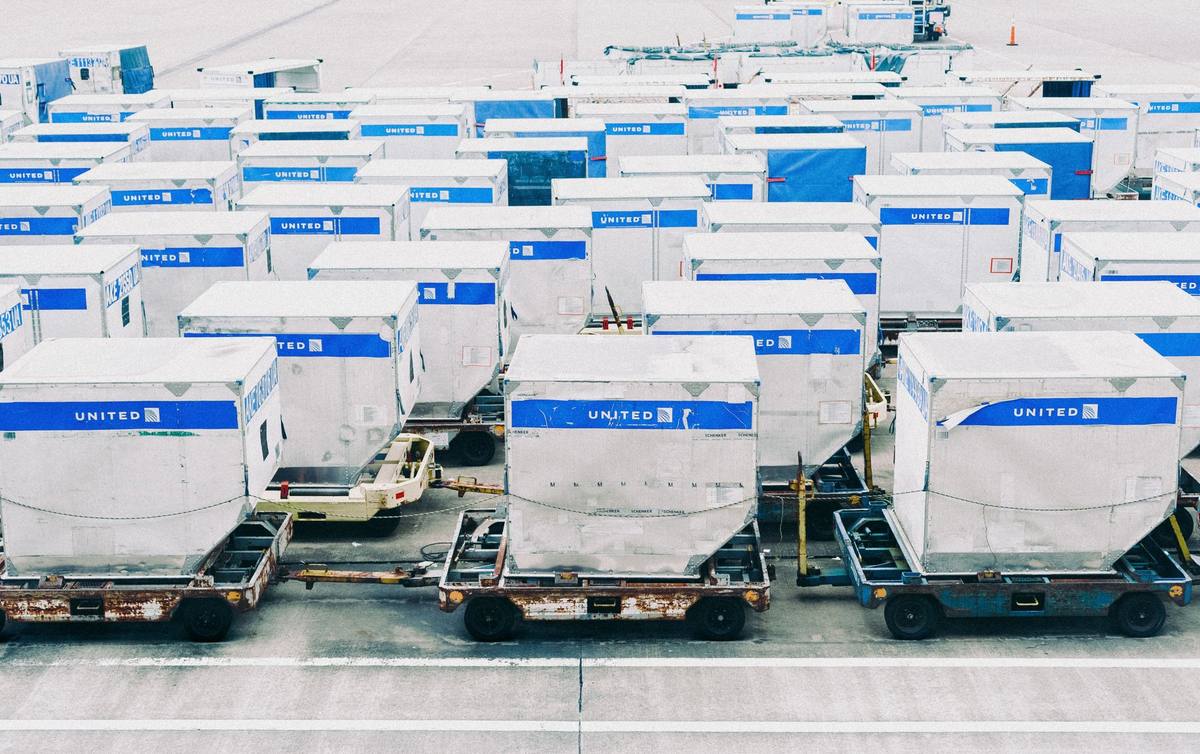
A lower freight rate can help a Nigerian product reach an African customer. It cannot make an unprepared business export-ready. Nigeria’s expanded air-cargo corridor with RwandAir deserves attention precisely because it makes regional trade more practical—but only for exporters who understand the documents, delivery costs and commercial risks behind the shipment.
For a food producer, fashion label or manufacturer considering sales beyond Nigeria, the useful question is not simply, “How cheap is the flight?” It is, “Can we deliver a compliant product, at an acceptable price, to a buyer who will pay?”
What the corridor changes
Reports published in June and July 2026 describe the expansion of Nigeria’s East and Southern Africa air-cargo corridor through a partnership between the Federal Ministry of Industry, Trade and Investment and RwandAir. The arrangement opened export access to Kigali, Lusaka and Harare, with additional carrier options for Nairobi and Johannesburg. 1
The Guardian’s 1 July report stated that cargo rates on the RwandAir routes were set at under US$2 per kilogram, available to Nigerian exporters holding an AfCFTA Certificate of Origin issued by the Nigeria Customs Service. That was a reported term of the launch arrangement, not a binding quotation for a shipment booked today. 1
Before using that figure in a sales offer, obtain a current written quotation. Confirm the commodity, route, flight connection, chargeable weight, available space and any conditions attached to preferential pricing. Also establish what the quote includes and excludes.
The corridor’s significance is greater choice for reaching regional markets. Its existence does not establish that every destination is served nonstop, every product is accepted, or every shipment qualifies for a tariff preference. Exporters need to distinguish network access from the arrangements for their particular consignment.
Who is most likely to benefit?
The launch report highlighted agribusiness, fashion and textiles, cosmetics, processed foods and light manufacturing. Those categories identify potential users, not automatic winners. 1
Air freight is most worth investigating where speed, product value or order size can justify the delivery cost. A fashion business fulfilling a time-sensitive wholesale order, or a producer testing demand with a small commercial shipment, may find it useful. The same logic may not hold for bulky, low-margin goods whose transport cost overwhelms their selling price.
There is also a difference between shelf-stable packaged food and fresh or chilled produce. RwandAir lists general-cargo and perishable-cargo services separately, with commodity- and destination-dependent documentation and handling requirements. Its published guidance makes acceptance subject to applicable customs, aviation and national regulations. 3
A faster journey is therefore not a substitute for a confirmed cold chain. Nor should an exporter treat cosmetics, liquids or other potentially restricted products as ordinary cargo without checking the actual formulation and carrier requirements.
“Made in Nigeria” is not the complete origin test
A Certificate of Origin is not simply a statement that a business operates in Nigeria. AfCFTA origin rules determine whether a product qualifies as originating for preferential treatment.
The African Union’s Rules of Origin Manual distinguishes origin-conferring production from insufficient processing. Simple repackaging or affixing labels, for example, does not by itself confer origin. Imported inputs require careful assessment against the rule applicable to the finished product. 4
Consider a Nigerian brand selling goods manufactured elsewhere. A Nigerian address, local packaging or a Nigerian-owned company does not automatically make those goods originating under AfCFTA. Conversely, imported inputs do not necessarily disqualify a product that undergoes sufficient qualifying production. The product-specific rule matters.
A Nigeria Customs Service certification presentation hosted by tralac begins with the product’s HS code—the customs classification code—and its applicable origin rule. It also calls for evidence of inputs, costing and production where relevant. 5
The practical lesson is to check the origin position before promising preferential treatment to a buyer. Keep the production evidence consistent with the invoice, packing list and shipment description.
Origin documentation does not replace destination compliance
Even a valid origin claim does not make a product automatically admissible or duty-free throughout Africa. The importing country’s tariff commitments, product coverage and current requirements still need to be checked. The Nigeria Customs guidance explicitly separates those checks from origin qualification. 5
For food and agricultural products, this may involve health, phytosanitary, labelling or other product-specific requirements. For other goods, standards, import permits or conformity checks may apply. RwandAir’s cargo guidance likewise identifies origin, transit and destination rules as part of shipment acceptance. 3
Ask the buyer’s licensed clearing agent or a qualified destination-market adviser to confirm what is needed for the specific product. Do not assume that clearance in Nigeria answers every question at the receiving end.
Also agree who is the importer of record, who obtains required approvals, and who bears the cost of a delay or rejection. An unresolved responsibility can become more expensive than the freight saving.
Price the delivered shipment—not the headline rate
A per-kilogram rate is only meaningful once the basis of charging is clear. Maersk’s air-freight guidance explains that chargeable weight generally reflects the higher of actual gross weight or volumetric weight. It also notes that carrier calculation rules can vary. 6
That matters for lightweight goods packed in large cartons. Reducing physical weight may not reduce the freight bill if the consignment still occupies substantial aircraft space. Confirm the carrier’s measurement rules rather than assuming the scale weight is the invoiced weight.
Build a shipment budget that includes the applicable costs from collection to final delivery: packaging, inland transport, export preparation, handling, freight, insurance, destination clearance, duties or taxes where applicable, and delivery to the customer. Check each item rather than assuming it is included or always payable.
Compare the resulting delivered cost with the buyer’s price and your required margin. Test what happens if clearance takes longer or a small part of the shipment is damaged. A route can be logistically available and still be commercially unsuitable for a particular order.
Secure the buyer and payment arrangements
Opening a transport route does not validate a buyer. Verify the counterparty’s identity, business standing and ability to receive the goods. Confirm specifications, quantities, delivery responsibilities and the procedure for accepting or rejecting the shipment.
Agree payment currency, timing and security before dispatch. The appropriate arrangement depends on the relationship and transaction; a first-time buyer should not receive unsecured credit merely because regional expansion feels promising.
For diaspora-backed ventures, this is especially important. The investor, Nigerian producer, freight forwarder and overseas customer may each believe someone else is controlling the transaction. Assign responsibilities in writing so that no critical check is left unattended.
Before the first shipment, answer five questions
- Product: What is the exact product and customs classification, and is the proposed cargo service suitable?
- Origin: Does it satisfy the applicable AfCFTA rule, and is the supporting evidence ready?
- Destination: What tariff treatment, permits, standards and receiving arrangements apply?
- Cost: What is the current written freight quote and the complete delivered cost?
- Buyer: Who is buying, when will payment occur, and who bears delivery and clearance risks?
Treat a small initial shipment as a controlled commercial test, not proof that every later order will be straightforward. Record the actual costs and elapsed time, then use that evidence to assess repeat orders.
The opportunity is real. Execution decides the result.
The expanded corridor creates a reason for Nigerian businesses to reassess regional exports. It does not remove the need for a viable product, qualified origin, a prepared importer or secure payment.
The strongest response is neither to dismiss the opportunity nor to rush goods to the airport. It is to select a realistic destination, confirm the requirements and establish whether the order works on a delivered-cost basis.
Detailed commercial information should be shared under an agreed NDA. Carrier acceptance, regulatory decisions, freight terms and buyer performance remain subject to independent confirmation.
This is general trade analysis, not a freight quotation or a shipment-specific legal, customs or financial opinion. Launch terms are attributed to dated reporting. Obtain current written confirmation before booking or committing to a buyer.
References
1 The Guardian, 1 July 2026 — Nigeria flags off expanded East-Southern Africa air cargo corridor.
2 STAT Times, 22 June 2026 — RwandAir expands cargo links between Nigeria and African markets.
3 RwandAir — Cargo Services; checked 13 October 2026.
4 African Union — AfCFTA Rules of Origin Manual.
5 Nigeria Customs Service origin-certification presentation, hosted by tralac.
6 Maersk, 10 March 2025 — Air cargo chargeable weight calculation explained.
From the iMedia archive, first published on 13 October 2026. This is general information, not legal, tax or investment advice, and some details may have changed since then. For help on the ground, see Investors and Companies.